GLOW Peptide Bundle: GHK-Cu, BPC-157 & TB-500 in Multi-Compound Tissue Research
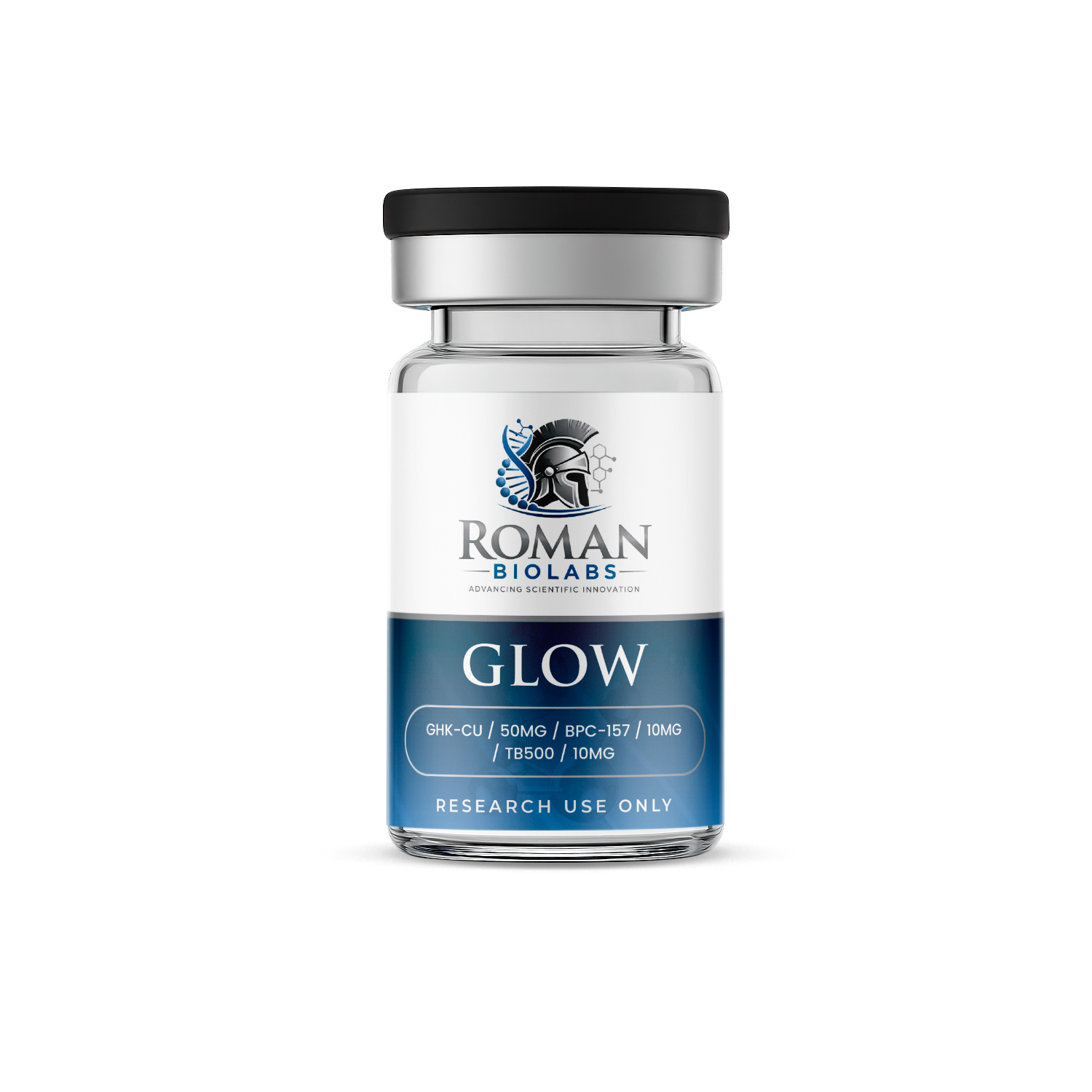
The GLOW bundle from Roman BioLabs combines three of the most extensively studied peptides in tissue remodeling and extracellular matrix research into a single, COA-verified research package: GHK-Cu (50mg), BPC-157 (10mg), and TB-500 (10mg). Each component is supplied as a separate lyophilized vial, giving researchers the flexibility to study them individually, in paired combinations, or in multi-compound experimental protocols.
This article provides a scientific overview of each component's research profile and discusses why these three peptides frequently appear together in the preclinical literature studying tissue biology, angiogenesis, and cellular repair cascades.
All compounds are for research use only. Not intended for human or veterinary use.
Why These Three Peptides?
GHK-Cu, BPC-157, and TB-500 represent three structurally distinct peptide classes that have been studied across overlapping but complementary biological domains. Each targets different molecular pathways, yet all three have been examined in the context of tissue remodeling, wound healing cascades, and angiogenic signaling, making their combination particularly well-suited for multi-pathway research designs.
GHK-Cu (Glycyl-L-Histidyl-L-Lysine Copper Complex)
GHK-Cu is a naturally occurring copper-binding tripeptide, just three amino acids: Gly-His-Lys, complexed with a Cu²⁺ ion. First identified in human plasma in 1973, it has since been detected in saliva, urine, and wound fluid, and has accumulated one of the more extensive research records of any small endogenous peptide.
Molecular weight: ~403.9 Da (as copper complex). CAS: 89030-95-5.
What makes GHK-Cu scientifically notable is its reported modulation of a remarkably wide range of gene expression targets. Published studies have documented its effects on genes governing collagen and glycosaminoglycan synthesis, metalloproteinase regulation (particularly MMP-1, MMP-2, and MMP-9), VEGF expression, decorin production, and anti-inflammatory cytokine profiles. Research has investigated its role across dermal biology, nerve regeneration models, anti-fibrotic signaling, and antioxidant pathway activation.
The 50mg quantity in the GLOW bundle is specifically sized to support larger-scale or longitudinal in vitro studies requiring repeated dosing across multiple experimental timepoints.
Key research applications:
- Collagen synthesis and ECM remodeling assays
- Wound healing and re-epithelialization models
- Anti-fibrotic and anti-inflammatory signaling studies
- Gene expression profiling under copper peptide stimulation
BPC-157 (Body Protection Compound 157)
BPC-157 is a synthetic pentadecapeptide (15 amino acids) derived from a partial sequence of human gastric juice protein. Molecular weight: ~1,419.5 Da. CAS: 137525-51-0. Sequence: Gly-Glu-Pro-Pro-Pro-Gly-Lys-Pro-Ala-Asp-Asp-Ala-Gly-Leu-Val.
Its proline-rich sequence confers notable enzymatic stability, a practical research advantage in assays requiring extended compound availability. BPC-157 has been studied in preclinical models spanning gastrointestinal mucosal biology, angiogenesis, connective tissue repair, and nitric oxide pathway interactions. In rodent models, it has been examined in the context of tendon and ligament repair, vascular endothelial cell behavior, and gut epithelial integrity.
In the context of a multi-compound tissue research design, BPC-157 adds coverage of the angiogenic and NO-pathway dimensions that GHK-Cu and TB-500 address through different molecular entry points, creating the opportunity for comparative or complementary mechanistic studies.
Key research applications:
- Angiogenesis and endothelial cell migration assays
- Gastrointestinal mucosal and epithelial research
- Connective tissue and tendon biology in rodent models
- Nitric oxide pathway interaction studies
TB-500 (Thymosin Beta-4 Synthetic Fragment)
TB-500 is a synthetic analogue of the actin-binding domain of Thymosin Beta-4, a naturally occurring 43-amino acid protein found in nearly all human and animal cells. TB-500's active fragment, Ac-LKKTETQ, corresponds to the region of Thymosin Beta-4 responsible for its actin-sequestering activity. Molecular weight: ~2,113.4 Da.
TB-500's primary mechanistic interest lies in actin cytoskeleton dynamics. By binding to G-actin monomers, it influences actin polymerization balance, a process central to cell migration, morphological changes, and tissue remodeling responses. Published research has examined TB-500 in models of endothelial cell migration, angiogenesis, cardiac tissue repair, and wound healing cascade regulation.
Its water solubility and low molecular weight relative to full-length Thymosin Beta-4 make it practical for cell culture applications and offer a well-defined active fragment for researchers who want to isolate actin-binding activity from the full protein's broader biology.
Key research applications:
- Actin cytoskeleton dynamics and cell migration studies
- Endothelial cell behavior and angiogenic cascade research
- Tissue remodeling and wound healing signaling models
- Cardiac biology and cytoprotective signaling assays
Multi-Compound Research Design Considerations
The scientific value of the GLOW bundle extends beyond the individual profiles of its components. Researchers designing multi-pathway studies benefit from having three well-characterized, COA-verified peptides available simultaneously, enabling parallel single-compound controls, combination treatments, and dose-escalation comparisons within a single experimental framework.
Representative multi-compound study designs enabled by the GLOW bundle:
- Parallel single-compound controls: Establish individual effect baselines for GHK-Cu, BPC-157, and TB-500 against a shared endpoint (e.g. VEGF expression, endothelial migration)
- Pairwise combination assays: Study additive or synergistic effects between any two of the three components
- Three-way combination experiments: Examine whether the full combination produces distinct outcomes versus individual or paired treatments
- Comparative stability and kinetics: Use all three compounds in a single degradation or pharmacokinetic assay to generate comparative data across structurally diverse peptide classes in one run
Quality and Bundle Composition
Each GLOW bundle contains three independently packaged, lyophilized vials:
| Component | Quantity | Purity |
|---|---|---|
| GHK-Cu | 50mg | ≥98% |
| BPC-157 | 10mg | ≥98% |
| TB-500 | 10mg | ≥98% |
All three components are manufactured under ISO and cGMP-consistent quality systems.
Order the GLOW Research Bundle →
Individual components are also available separately:
Research Use Disclaimer
All components of the GLOW bundle are intended for laboratory research use only. They are not intended for human or veterinary use and have not been evaluated by the FDA for therapeutic, diagnostic, or clinical purposes.