Overview
BPC-157 and TB-500 are two of the most widely studied synthetic research peptides in preclinical regenerative medicine. While both have attracted scientific interest for their roles in tissue repair and angiogenesis, they are structurally distinct compounds that operate through different molecular mechanisms and have been studied across different tissue systems.
This article provides a research-focused comparison of the two peptides based on the current peer-reviewed literature. Neither compound has been approved by the U.S. Food and Drug Administration for human therapeutic use. Both are classified as research-use-only (RUO) materials.
What Is BPC-157?
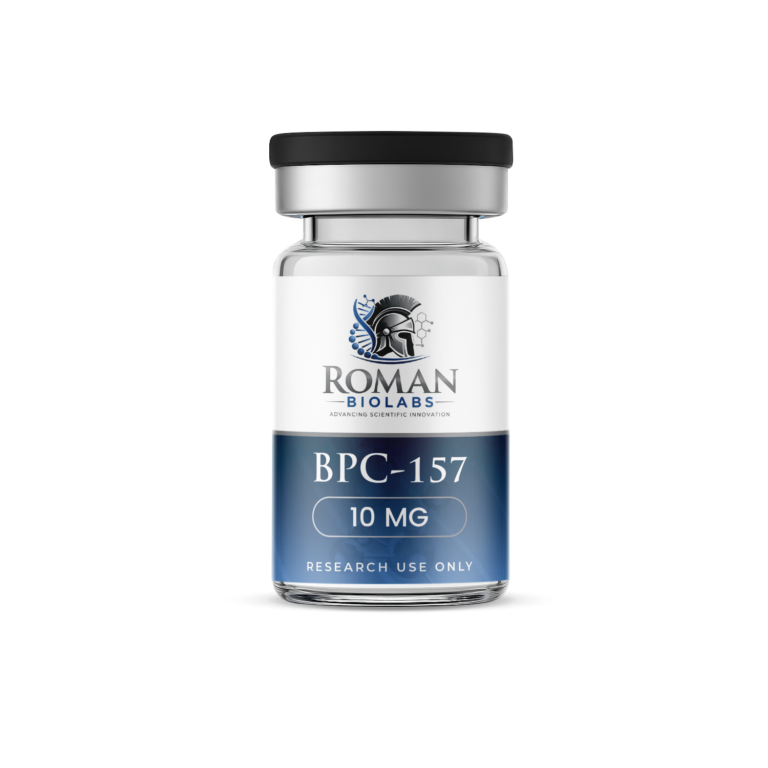
BPC-157 (Body Protective Compound-157) is a synthetic pentadecapeptide — a chain of 15 amino acids (Gly-Glu-Pro-Pro-Pro-Gly-Lys-Pro-Ala-Asp-Asp-Ala-Gly-Leu-Val) — originally derived from a protective protein found in gastric juice. First characterized in 1993, it has since been studied across a broad range of preclinical models involving soft tissue, gastrointestinal, musculoskeletal, and neurological injury.
One notable property of BPC-157 is its physicochemical stability. The peptide resists enzymatic degradation and remains stable in gastric acid, which has made it a subject of interest in both injectable and oral administration research.
What Is TB-500?
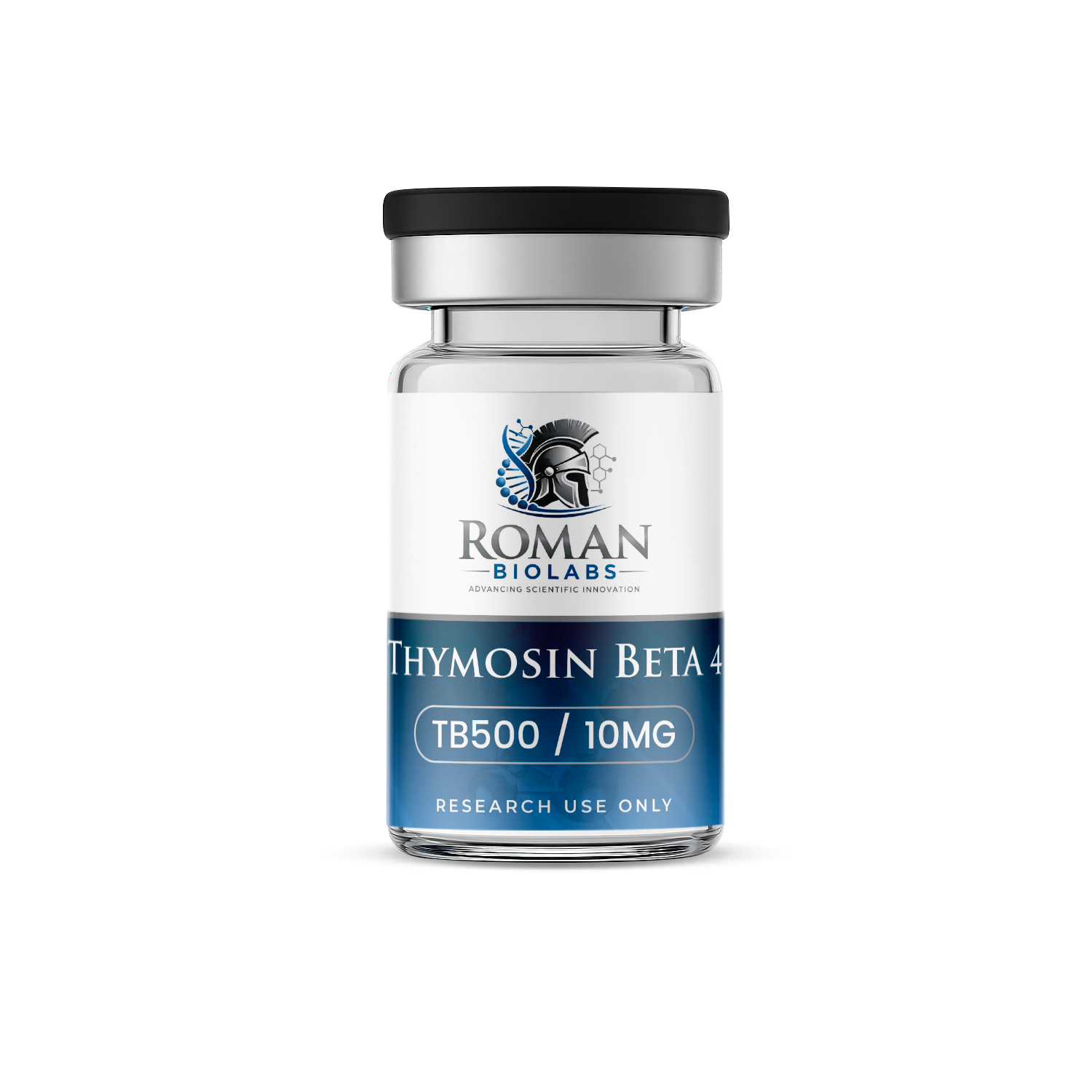
TB-500 is a synthetic analogue of thymosin beta-4 (Tβ4), a naturally occurring 43-amino acid polypeptide that is highly conserved across species. Thymosin beta-4 is found in elevated concentrations in platelets, macrophages, and wound-healing tissues, where it plays a central role in cellular differentiation and tissue remodeling.
The TB-500 fragment retains the primary active domain of thymosin beta-4 responsible for its biological activity. Unlike BPC-157, which is a fully synthetic sequence derived from a gastric protein, TB-500 is a fragment of an endogenous human protein — a distinction that affects its mechanism of action at the cellular level.
Mechanisms of Action: How They Differ
Despite overlapping effects on healing and angiogenesis, BPC-157 and TB-500 operate through distinct primary mechanisms.
BPC-157: Multi-Pathway Signaling
BPC-157 exerts its effects through several converging pathways:
- VEGF/VEGFR2 upregulation: BPC-157 promotes angiogenesis by upregulating vascular endothelial growth factor receptor 2 (VEGFR2) expression in endothelial cells, enhancing blood vessel formation and tissue perfusion (Yuan et al., Int. J. Mol. Sci., 2026).
- Nitric oxide (NO) system modulation: The peptide interacts with nitric oxide synthase activity, influencing vascular tone, endothelial homeostasis, and inflammation modulation.
- ERK1/ERK2 activation: BPC-157 activates extracellular signal-regulated kinases involved in cell proliferation and survival, contributing to wound repair.
- Growth hormone receptor signaling: Studies indicate BPC-157 enhances growth hormone receptor expression, influencing tissue growth and regeneration.
- Collagen synthesis and ECM remodeling: Preclinical burn and tendon models show increased collagen deposition and improved extracellular matrix organization following BPC-157 administration.
- Inflammatory cytokine modulation: BPC-157 has demonstrated the ability to reduce pro-inflammatory cytokine activity and modulate NF-κB signaling pathways.
TB-500: Actin Dynamics and Cellular Migration
TB-500's primary mechanism centers on G-actin sequestration. The peptide binds with high affinity to monomeric G-actin — the building blocks of the actin cytoskeleton — preventing polymerization and facilitating cellular migration. This makes TB-500 the major monomeric actin-sequestering molecule in eukaryotic cells studied in this context.
Additional mechanisms include:
- Angiogenesis via endothelial cell migration: TB-500 stimulates endothelial cell migration, proliferation, and tube formation, promoting neovascularization through multiple pathways.
- Macrophage polarization: TB-500 appears to shift macrophage phenotype from pro-inflammatory M1 toward anti-inflammatory M2, supporting the resolution of inflammation and transition to tissue repair.
- Cardioprotective effects: Preclinical cardiac models have shown that TB-500 can reduce infarct size, preserve cardiac muscle viability, and promote neovascularization in ischemic tissue.
- Neural regeneration: Early research suggests TB-500 may facilitate axonal growth and synaptic plasticity following neurological injury.
Key Mechanistic Difference
The clearest distinction is in their primary cellular target: BPC-157 primarily acts through growth factor receptor signaling and NO pathways, while TB-500 acts primarily through cytoskeletal regulation and cellular migration. Both converge on angiogenesis and inflammation modulation, but by different routes.
Preclinical Research: What Each Peptide Has Been Studied For
| Research Area | BPC-157 | TB-500 |
|---|---|---|
| Skin and soft tissue healing | ✅ Extensive (burn, wound models) | ✅ Wound healing models |
| Tendon and ligament repair | ✅ Achilles, MCL models | ✅ Tendon repair models |
| Muscle injury | ✅ Multiple routes studied | ✅ Muscle strain models |
| Bone healing | ✅ Rabbit segmental bone defect | Limited data |
| Gastrointestinal healing | ✅ Extensive (GI, gastric ulcer) | Limited data |
| Cardiac protection | Limited data | ✅ Myocardial infarction models |
| Neural regeneration | Some evidence | ✅ Stroke and neural injury models |
| Pain modulation | ✅ Incisional and formalin models | Limited data |
BPC-157's research base is notably broader in gastrointestinal and musculoskeletal applications. TB-500 has a stronger preclinical record in cardiovascular and systemic tissue regeneration contexts. These patterns reflect the different origins and mechanisms of each compound.
Administration and Stability
Both peptides are typically supplied in lyophilized (freeze-dried) powder form for research use. However, their stability profiles differ:
- BPC-157 demonstrates stability across diverse biological environments, including resistance to gastric acid. This property has supported research into oral, intraperitoneal, and topical administration routes.
- TB-500 is generally administered via subcutaneous or intramuscular injection in preclinical research. Its oral bioavailability has not been as thoroughly characterized.
In preclinical rodent studies, BPC-157 bioavailability has been reported at approximately 14–19% in rats and 45–51% in beagle dogs, with a half-life of less than 30 minutes. Comparable pharmacokinetic data for TB-500 in humans is similarly limited.
Human Data: What Exists
The human research record for both peptides is limited. Neither compound has been evaluated in large-scale randomized controlled trials.
BPC-157 human studies (as summarized in Yuan et al., 2026):
- Retrospective chart review (n=12): Intra-articular injection for chronic knee pain produced relief lasting over 6 months in 11 of 12 participants.
- Pilot study (n=12): A single 10mg intravesical injection reduced interstitial cystitis symptoms, with 10 of 12 patients reporting total resolution.
- Safety study (n=2): IV administration of up to 20mg in healthy adults produced no measurable adverse effects on cardiac, renal, hepatic, or glycemic markers.
TB-500 human data: Formal published clinical trial data for TB-500 specifically is extremely limited. Thymosin beta-4 (the parent molecule) has been evaluated in Phase I/II trials for cardiac repair and wound healing, but the TB-500 fragment itself lacks equivalent published human trial data.
Both peptides share a common limitation: a 2015 Phase I BPC-157 trial (n=42) remains unpublished for unknown reasons, representing a significant gap in available human pharmacokinetic data.
Safety Considerations
Based on available preclinical data, both peptides have demonstrated relatively favorable safety profiles in animal models:
- No significant adverse effects were observed across multiple organ systems in rodent and canine toxicity studies for BPC-157.
- No teratogenic effects were observed in rat reproduction studies for BPC-157.
- TB-500 preclinical studies similarly showed no significant adverse effects at studied doses.
One shared safety consideration for both peptides is their proangiogenic activity. Because angiogenesis is a key process in tumor growth and metastasis, researchers and clinicians have noted that both compounds require careful consideration in the context of oncological screening — particularly given that many cancers remain clinically silent in early stages (Mcauley, GlobalRPH, 2025).
Neither peptide has established long-term safety data in humans. This is an important limitation that researchers should account for when designing studies.
Regulatory Status
| BPC-157 | TB-500 | |
|---|---|---|
| FDA approved for human use | No | No |
| WADA prohibited | Yes | Yes |
| RUO classification | Yes | Yes |
| Available for research | Yes | Yes |
Both compounds are classified as research-use-only materials in the United States. They are not dietary supplements, drugs, or medical devices. Researchers should ensure compliance with applicable institutional and jurisdictional regulations when using either compound.Certificates of Analysis are available for each lot.
BPC-157 is available in 5mg, 10mg, and 20mg configurations.
View BPC-157 Research Peptide →
⚠️ Research Use Only. All products sold by Roman BioLabs are intended exclusively for in vitro laboratory research. They are not approved for human or veterinary use and are not intended to diagnose, treat, cure, or prevent any disease or condition.
References
Yuan C, Demers A, Silva-Ortiz V, Hasoon JJ, Lee W, Dave K, Amirdelfan K, Burke HW, Christo PJ, Robinson CL. From Regeneration to Analgesia: The Role of BPC-157 in Tissue Repair and Pain Management. Int. J. Mol. Sci. 2026;27(6):2876. https://doi.org/10.3390/ijms27062876
Mcauley D. BPC-157 and TB-500: Background, Indications, Efficacy, and Safety. GlobalRPH. November 2025. https://globalrph.com/2025/11/bpc-157-and-tb-500-background-indications-efficacy-and-safety/
Goldstein AL, Hannappel E, Sosne G, Kleinman HK. Thymosin β4: a multi-functional regenerative peptide. Basic properties and clinical applications. Expert Opin Biol Ther. 2012;12(1):37-51.
Bock-Marquette I, Saxena A, White MD, Dimaio JM, Srivastava D. Thymosin β4 activates integrin-linked kinase and promotes cardiac cell migration, survival and cardiac repair. Nature. 2004;432(7016):466-472.